
Home / Resources / Articles / Tool Register
Back to articles Tool RegisterWhy Spreadsheets Fail at Asset Management
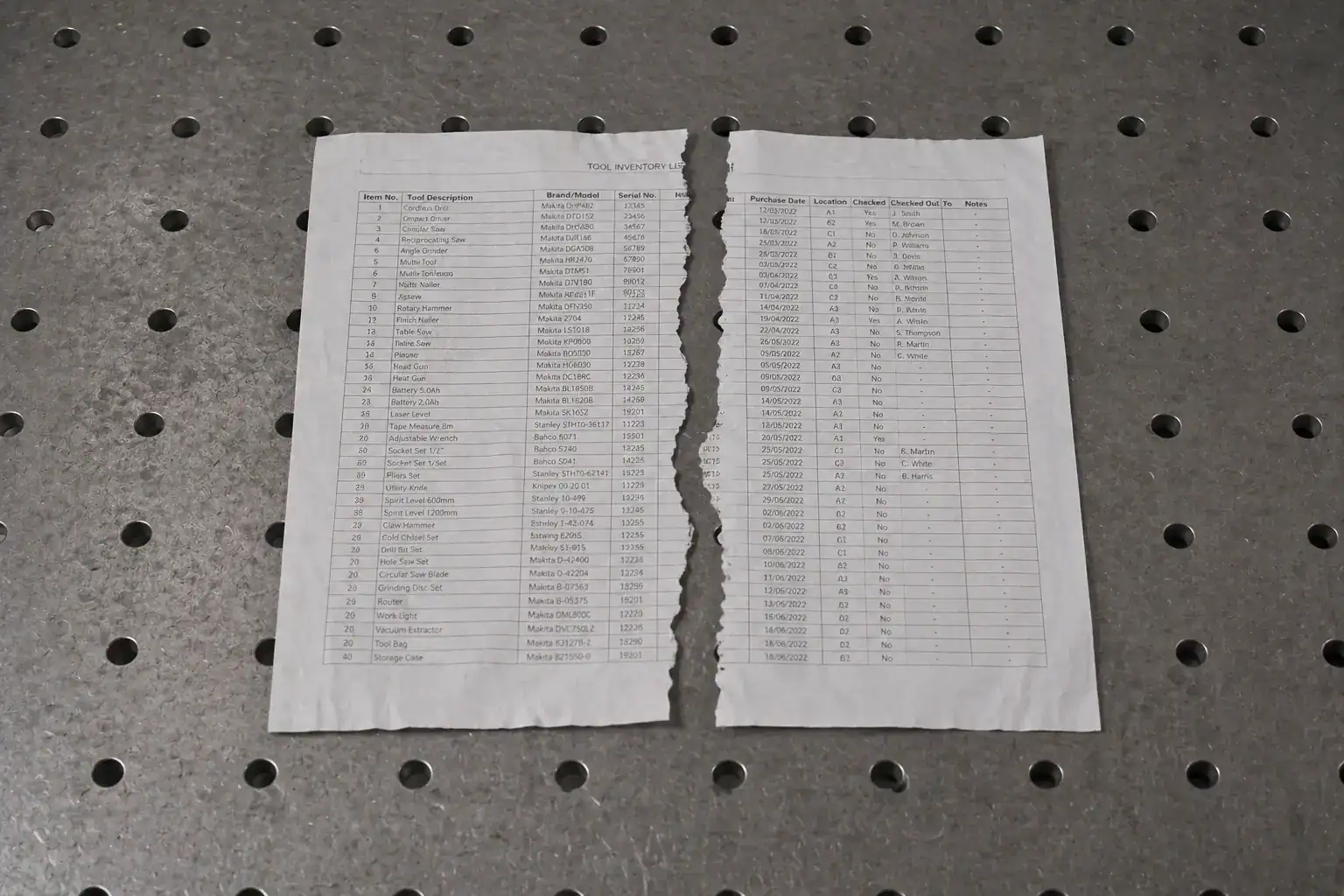
Spreadsheets are where most businesses start.
They are familiar, cheap and easy to set up.
For a while, they work.
Then the business grows.
More staff. More vans. More sites. More equipment moving around.
That is usually when the spreadsheet starts falling apart.
The Spreadsheet Problem Is Not The Spreadsheet
The issue is not Excel itself.
The issue is that spreadsheets rely entirely on manual discipline.
They only stay accurate if people:
- Update them every time equipment moves
- Log every purchase and disposal
- Record temporary loans and transfers
- Keep versions synced across the business
In fast-moving businesses, that rarely happens consistently.
Static Data Cannot Track Dynamic Operations
The more mobile your workforce becomes, the faster spreadsheets become outdated.
That is especially true for builders, electricians and growing construction companies where tools and equipment move daily.
By the time someone updates the sheet, the data is often already wrong.
That turns the spreadsheet into a historical record, not a live management system.
Key Limitations of Spreadsheet-Based Asset Tracking
| Limitation | Why It Matters |
|---|---|
| No live updates | Data quickly becomes outdated |
| No audit trail | Hard to see who changed what |
| Poor mobile usability | Difficult for field teams to update |
| No automated alerts | No movement/maintenance reminders |
| Weak document handling | Hard to link receipts/photos |
| Version control issues | Multiple conflicting files |
These are common reasons spreadsheet-led asset management breaks down as businesses scale.[1]
Spreadsheet Errors Create Real Costs
Poor asset data leads to:
- Duplicate purchases
- Missing equipment disputes
- Delayed insurance claims
- Weak accountability
- Unnecessary hire costs
- Time wasted searching for tools
Individually these issues feel small.
Together they create serious operational leakage.[2]
What Better Businesses Use Instead
Businesses with stronger control typically move to dedicated systems offering:
- Live digital asset registers
- Mobile access for field teams
- Asset allocation tracking
- Document storage per asset
- Audit history
- GPS integration where relevant
These systems are designed around operational reality rather than static admin records.[3][4]
How KYNEKT Replaces Spreadsheet Chaos
KYNEKT gives businesses a live digital alternative to spreadsheet-based tracking.
Relevant solutions include:
- KYNEKT Inventory App for live asset registers
- KYNEKT ID App for proof of ownership and registration
- K|TRAK for GPS tracking on higher-risk assets
- KYNEKT Product Suite for connected asset management workflows
This helps businesses manage assets in real time rather than retrospectively.
Frequently Asked Questions
Are spreadsheets good for asset management?
They can work for very small businesses with limited asset movement, but they struggle as complexity grows.
Why do spreadsheets fail for tracking tools?
Because they rely on manual updates and become outdated quickly in dynamic environments.
What is better than a spreadsheet for asset tracking?
A dedicated digital asset management platform designed for live operational use.
Final Thoughts
Spreadsheets are often where businesses begin.
They should not be where growing businesses stay.
Once equipment movement becomes dynamic, spreadsheets stop being a system and start becoming a liability.
Download the App
Replace spreadsheet chaos with KYNEKT.
Download the app: https://dev.kynekt.id/download-app/
Sources
[1] https://www.ibm.com/topics/asset-management
[2] https://www.mrpeasy.com/blog/asset-management-system/
[3] https://www.sap.com/uk/products/scm/eam/what-is-enterprise-asset-management.html
[4] https://www.clickmaint.com/blog/asset-management-best-practices